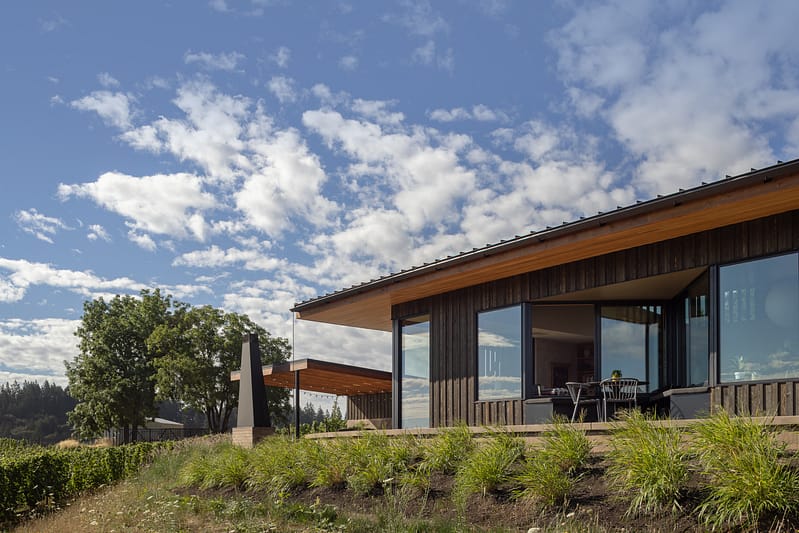

Check out our madrona passive house portfolio page
Original Title: Madrona Passive House construction begins on a Seattle hillside
Original Author: Zack Semke
Originally Posted on: Sept 5th, 2014
We’re excited to announce that Hammer & Hand has broken ground at Madrona Passive House, located in Seattle’s Madrona neighborhood on a hillside overlooking Lake Washington.
Actually, to say we’ve “broken ground” is an understatement. The project team began construction by boring 26 holes into the hill, some 12 feet deep and others 28 feet deep, ranging in diameter from 16 to 24 inches. We then poured concrete piles into each hole, reinforced with I-beams for the 24-inch piles and rebar for the 16-inch ones.
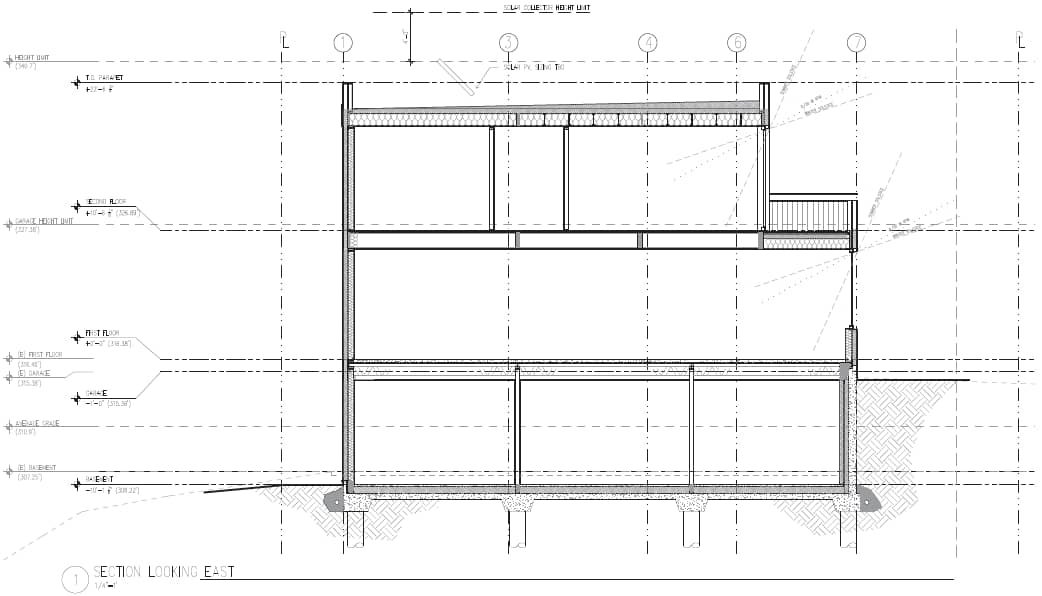
Section of Madrona Passive House, showing how the structure is built on a platform-on-stilts. Image courtesy of SHED Architecture & Design.
This piling system will support a structural slab upon which we’ll build Madrona Passive House, creating a platform-on-stilts to effectively float the home above the site’s environmentally critical steep slope and marginal soils. See H&H lead carpenter Eli Semke describe the piling installation in this video:
The 3762sf house, designed by SHED Architecture & Design with Passive House consulting and construction by H&H, demonstrates the flexibility of Passive House to deliver super-efficient buildings to the most challenging sites. We’ll layer structural foam on the platform-on-stilts to create the “basement” portion of the high performance envelope. Exterior walls will anchor to the structural slab and feature high density cellulose insulation, ZIP sheathing as the vapor-permeable air barrier, mineral wool exterior insulation, and a rainscreen of vertical cedar siding to ensure lots of air movement across the wall face to increase the wall’s drying potential. The roof will include high density cellulose insulation, tapered foam, and a thermally isolated stanchion for the project’s 9.8 kW solar PV array.
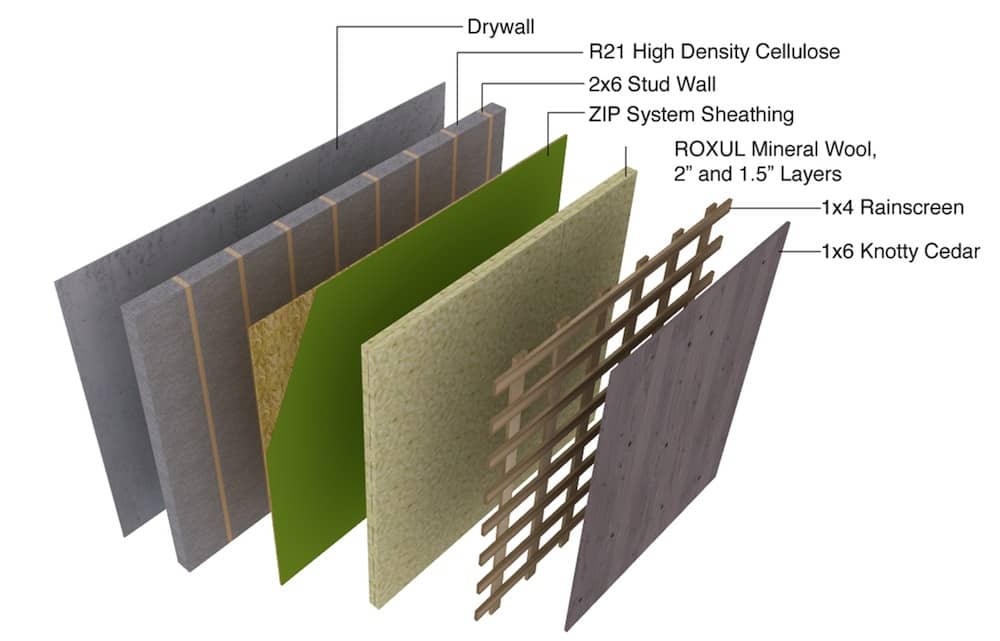
High performance wall assembly at Madrona Passive House.
We’ll dive into more detail here as the project progresses. It’s fun to be sinking our teeth into another unique application of Passive House design and construction!
Original Title: Airtightness at Madrona Passive House? Easy peasy.
Original Author: Laura Grange
Originally Posted on: Feb 6th, 2015
One of three performance metrics for Passive House certification is air tightness of the building envelope (the other two are heating/cooling load and primary energy demand). After months of construction it was time yesterday to test the air tightness of our Madrona Passive House project.
We’re excited to say that the results from our blower door test came in at .32ACH50! That’s almost 50% better than the air tightness standard (.60ACH50). The structure of the building has more complexities than a simple design, which makes meeting the air tightness standard a bit more challenging. That’s why we’re particularly excited to have such a successful blower door test.
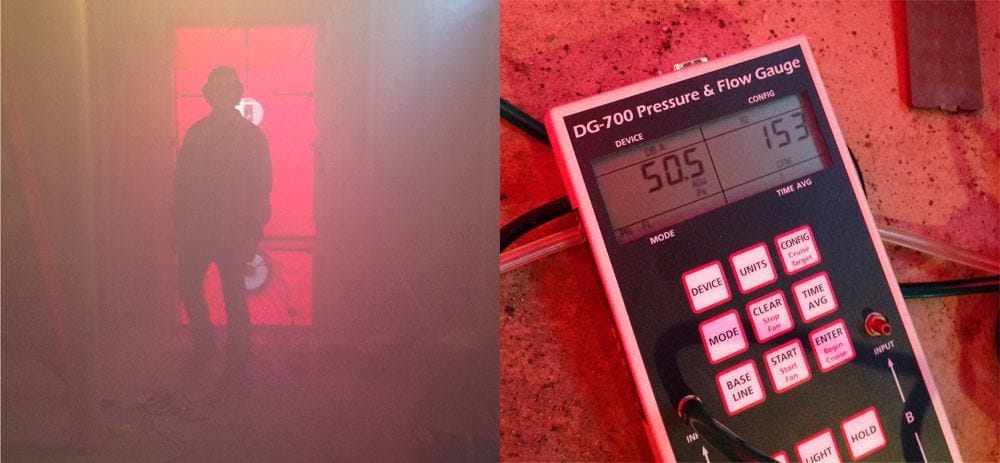
Left: Passive House colleague Brian Cowan is immersed in the cloud of theatrical smoke used to locate air movement. Right: The gauge showing building pressure at 50.5 pascals and air flow at 153 cubic feet per minute.
Below: Front entry door showing no air leaks during the test.
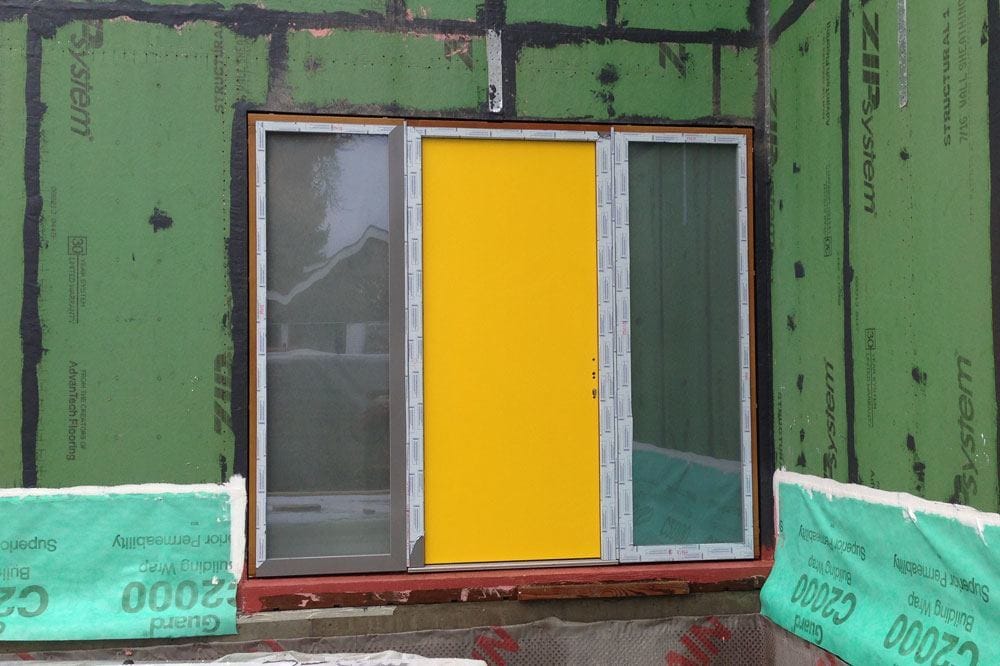
Now that we’ve completed this test we can move ahead with covering up our building shell. This will involve installation of the Roxul ComfortBoard IS and ventilated rain screen battens. This will quickly be followed by the Forest Stewardship Council® certified cedar siding.
Original Title: Madrona Passive House Progress & NW Green Home Tour
Original Author: Laura Grange
Originally Posted on: April 8th, 2015
Today we’re excited to share a peek at our progress at Madrona Passive House and to announce that the home will be part of the NW Green Home Tour on Saturday, April 25th from 11am – 5pm. If you would like to check it out in person get tickets here! The three-level Passive House features sweeping views of Lake Washington and the Cascades and is currently at the beginning of the interior and exterior finishes stage.
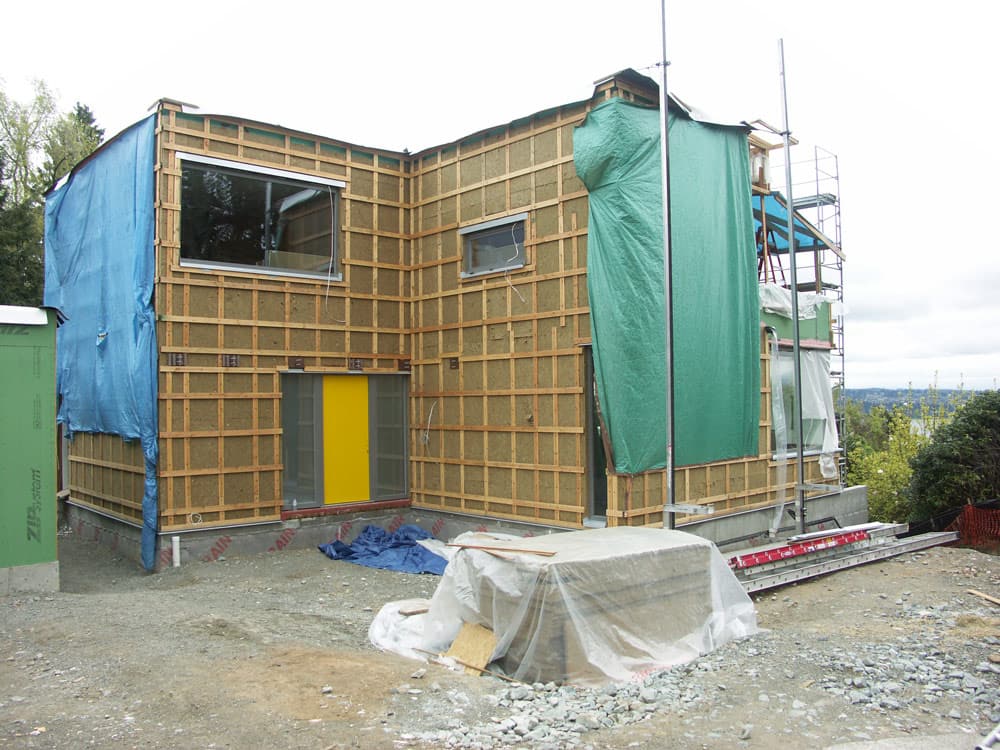
The above photo shows the home’s ROXUL mineral wool monolithic exterior insulation and 1 x 4 rainscreen. High performance windows and front door are in.
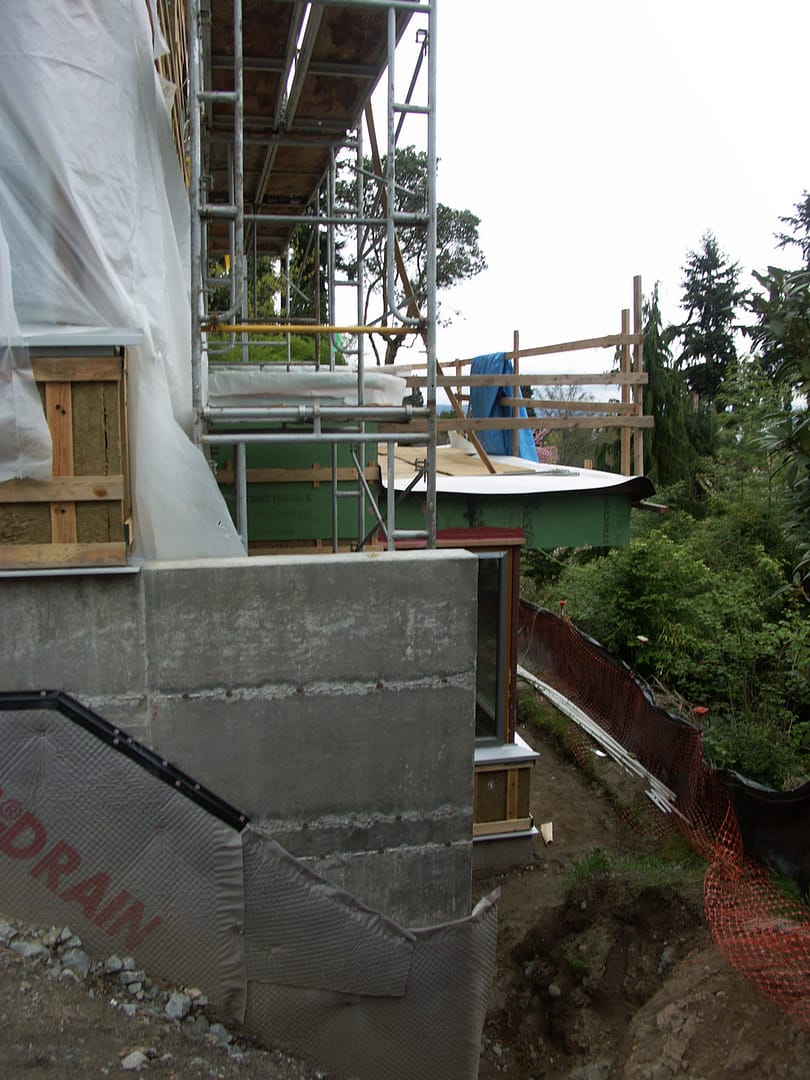
The site’s steep slope posed unique challenges for both builder and architect. “The Passive House requirements of having an insulated foundation and the geotechnical issues all came together at the foundation,” said SHED Architecture and Design Project Manager Alex. The solution was to build an extensive piling system (check out this video for more about the pilings) with a concrete structural slab resting on top of the piles. H&H then built the Passive House enclosure on that platform.
In the photo above you can see the east side of the house and how it is built into the side of the hill. The bottom level, which will serve as the kids’ space, can be transformed into a separate ADU later on once the kids leave for college.
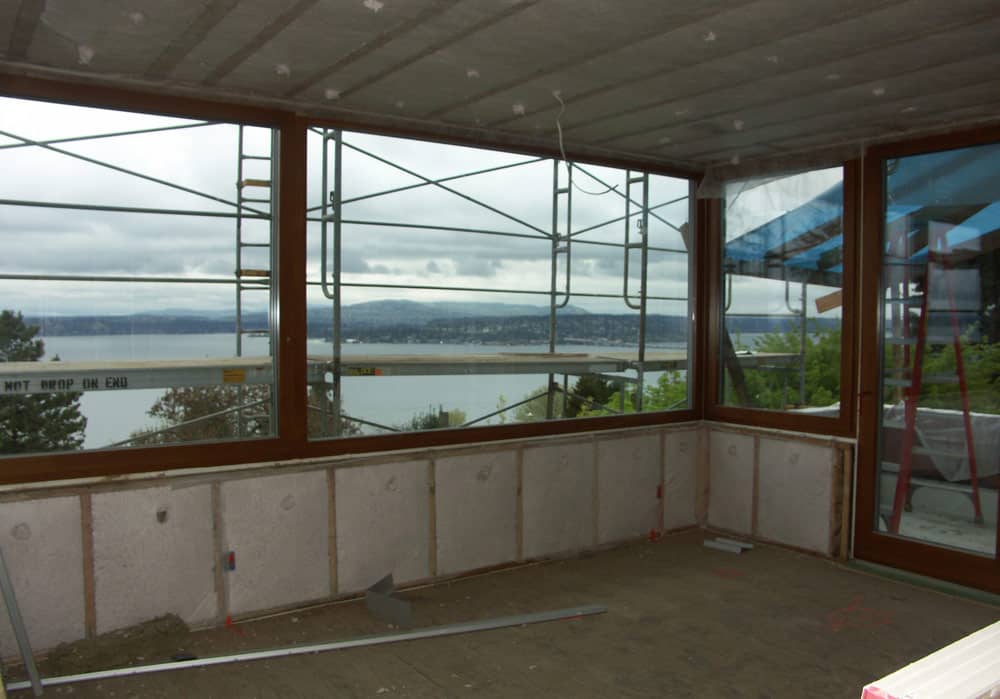
Windows are plentiful in this project, especially on the east side of the home.
“The views were a big priority,” said Alex. “The clients are very active – they spend a lot of time in the mountains. They wanted a view of the Cascades so from their second floor they could potentially see almost 180 degrees of a mountain range and almost all of Lake Washington.”
We hope you come check out the project during the NW Green Home Tour this month and we’ll be sure to share more updates as the project progresses.
Original Title: Madrona Passive House Wall Assembly, Illustrated: Fourth of Four analyses of high performance walls
Original Author: Zack Semke
Originally Posted on: Oct 1st, 2015
NOTE: This is the last of four posts delving into the anatomy of high performance wall assembly. The last post featured the wall at the Glasswood Passive House Retrofit. This week’s explains our approach at Madrona Passive House. All four analyses are part of our building science exhibit, “Evolution of Enclosure,” that recently completed a 5-week showing at AIA Portland’s Center for Architecture.
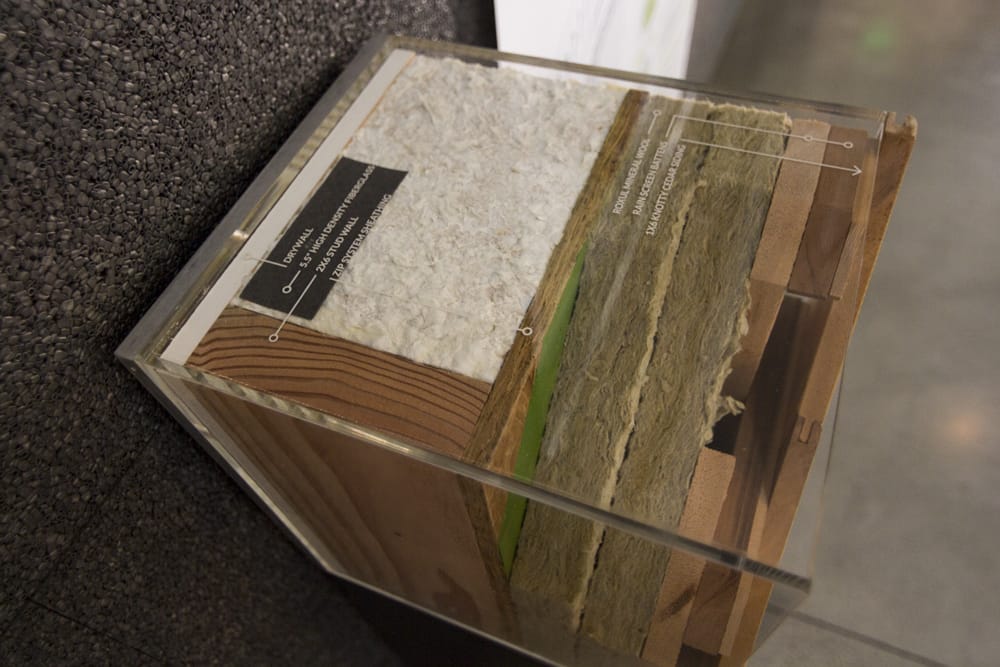
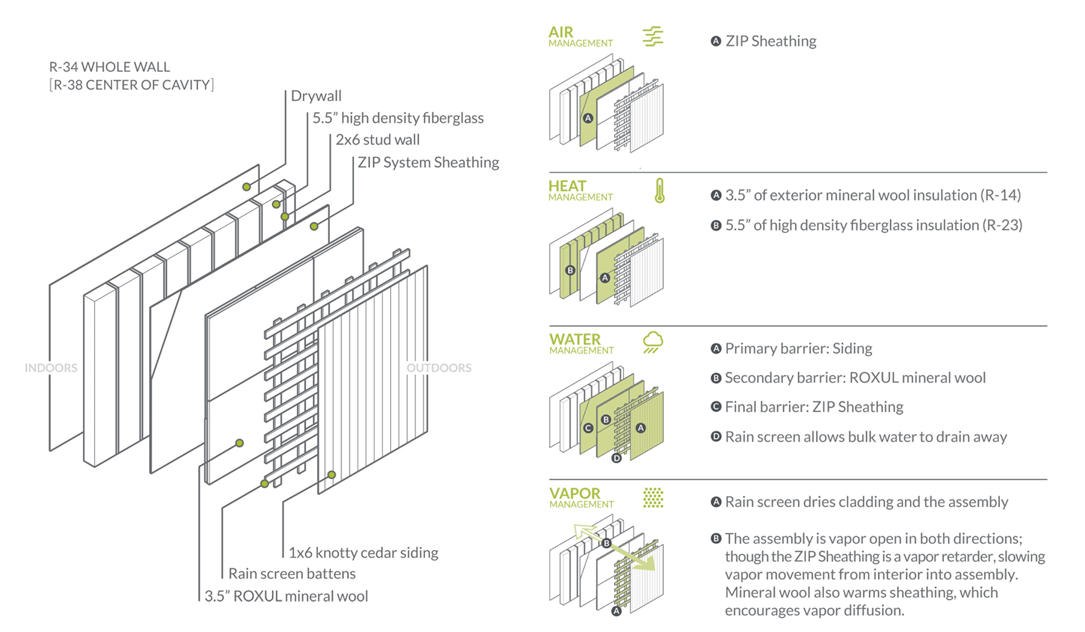
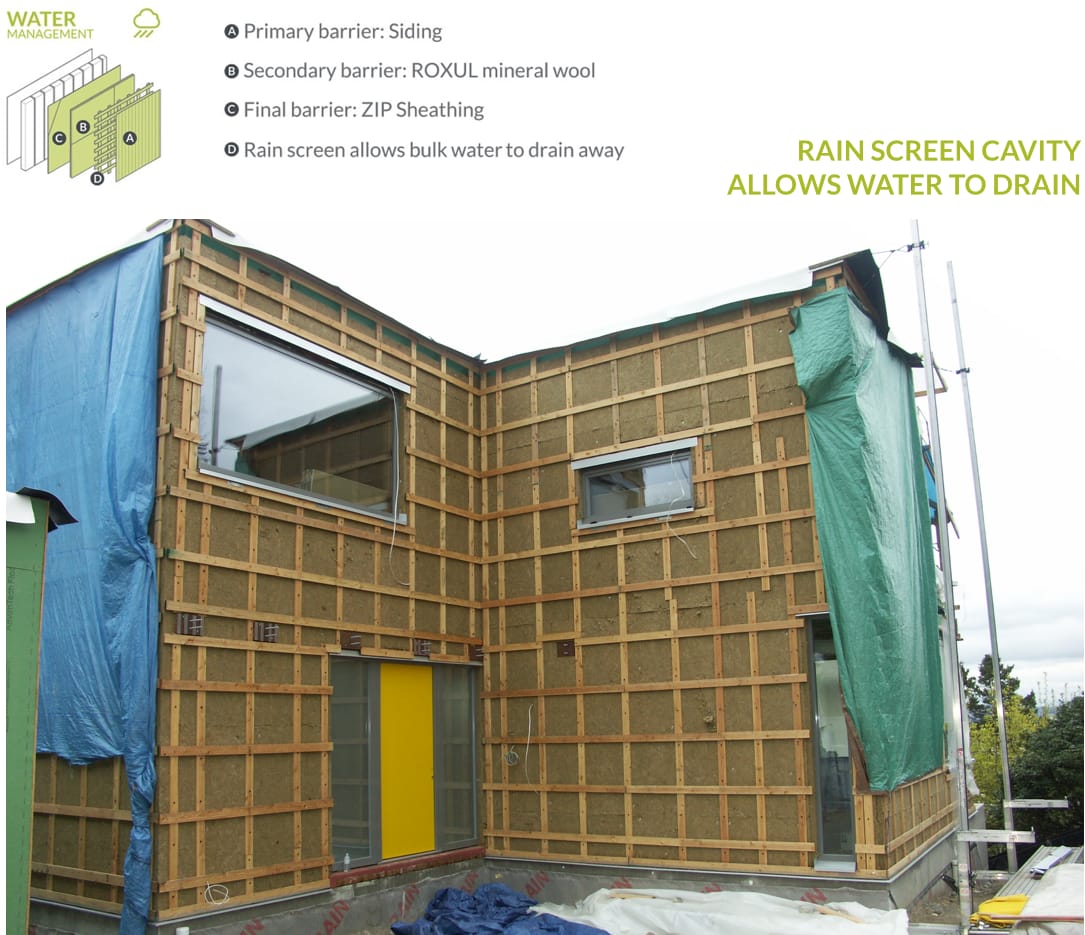
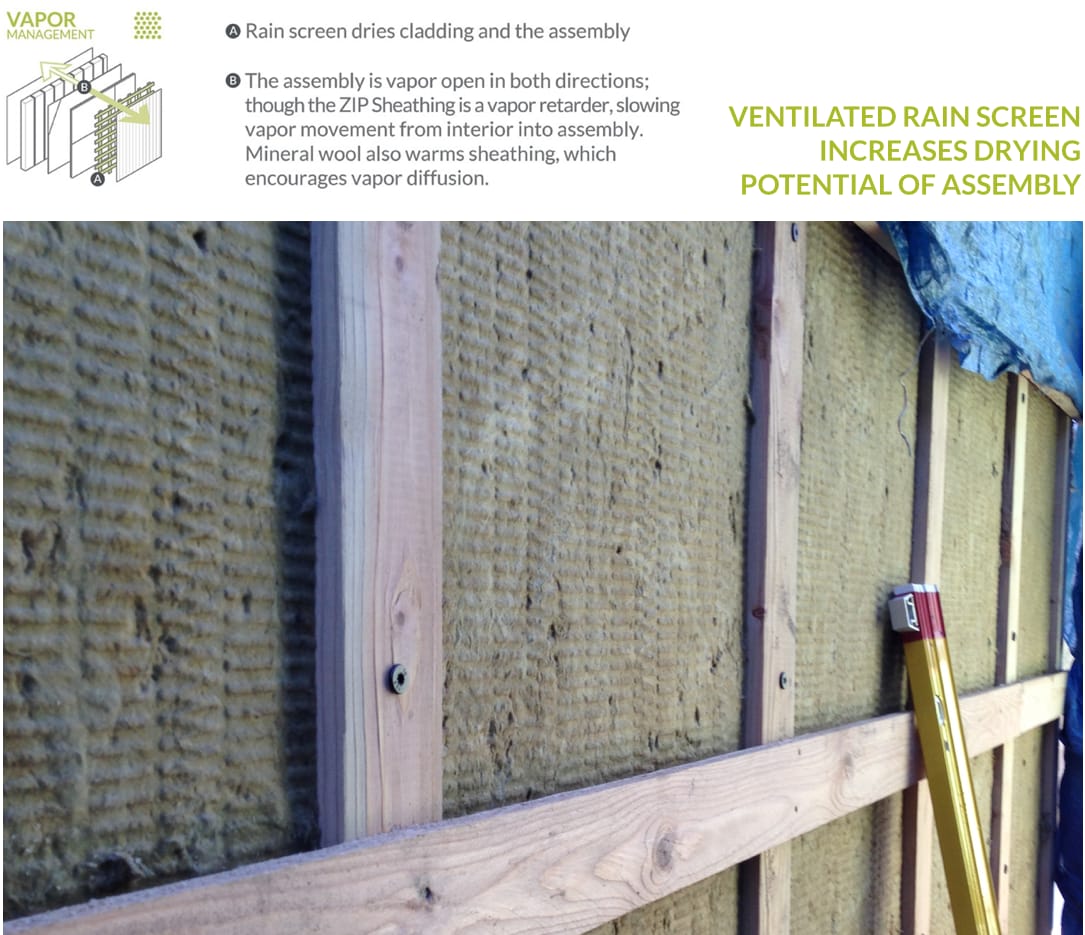
The wall assembly at Madrona Passive House shows how Hammer & Hand’s approach to high performance envelope construction is evolving. With each project we are working to simplify assembly and hew as closely as possible to standard construction techniques. This is good for our installers in the field and for project budgets. The wall at Madrona Passive House takes advantage of the compressive strength of mineral wool to suspend the home’s exterior insulation with the rain screen battens’ fasteners.
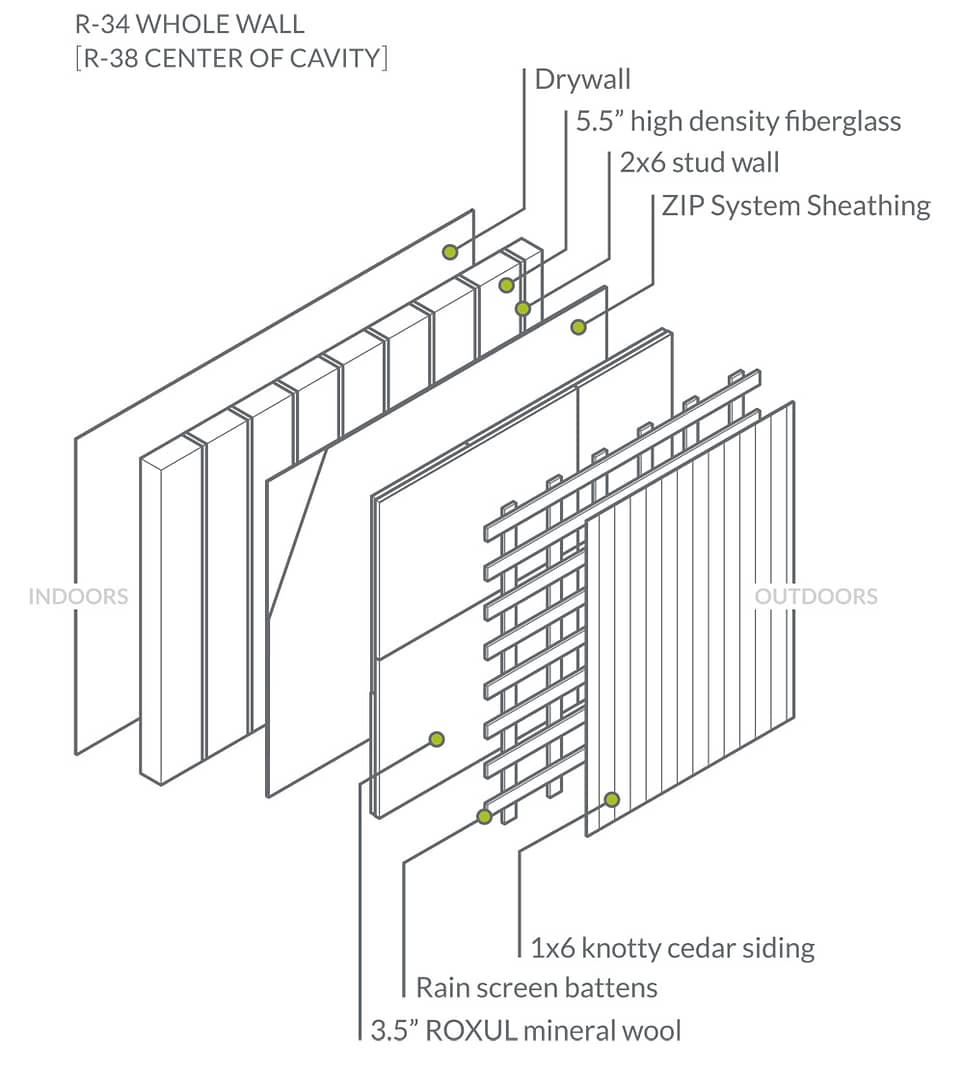
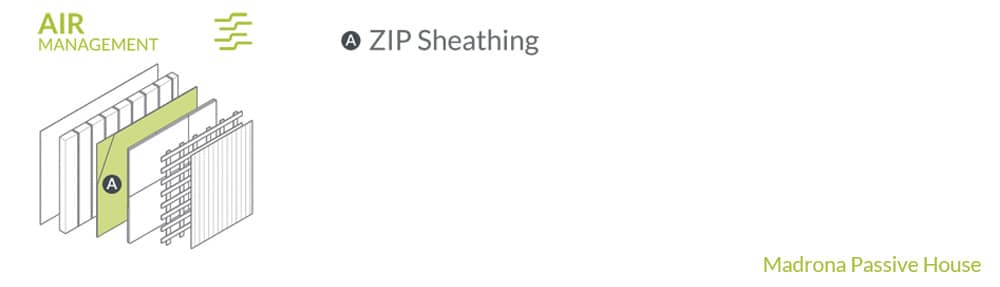
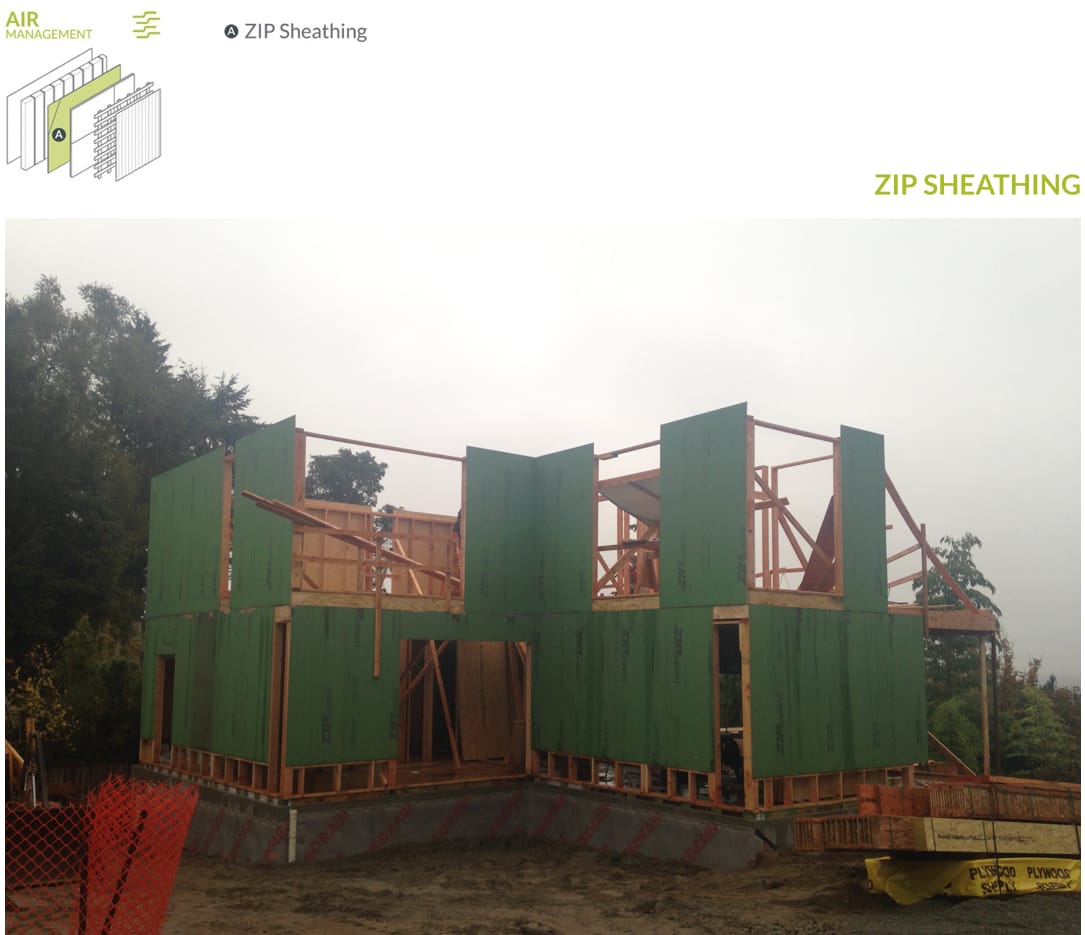
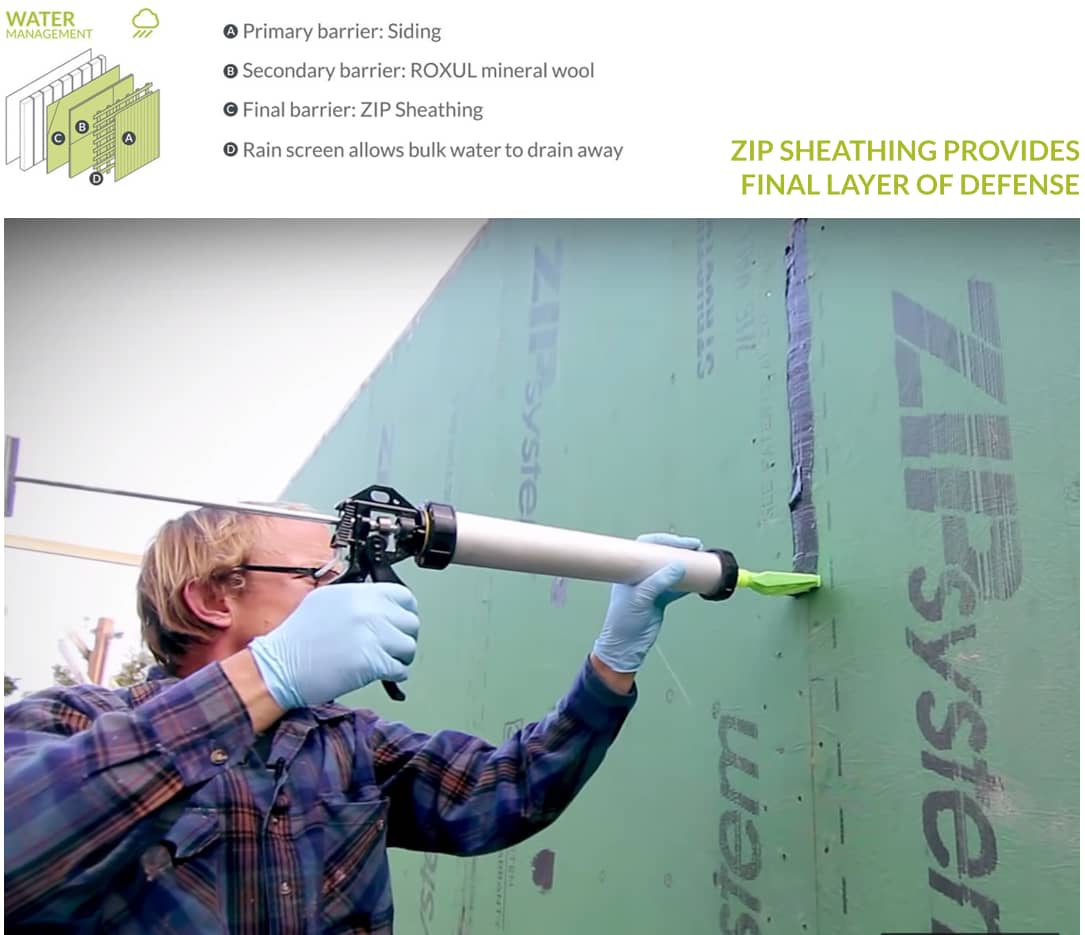
ZIP System Sheathing (sheets of OSB covered in a weather resistant coating) with fluid applied sealant at seams, serves as the assembly’s air barrier (and WRB).
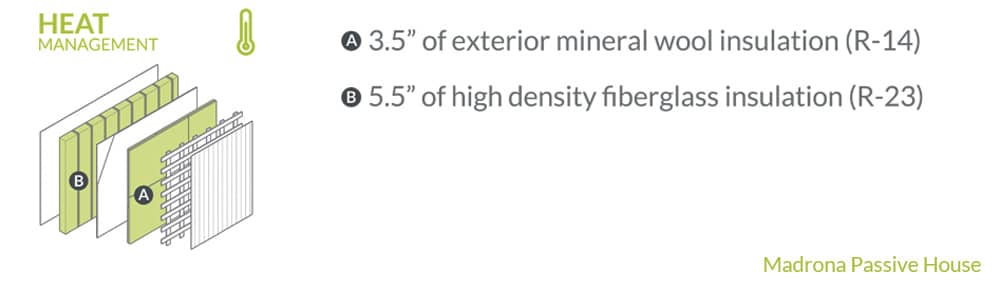
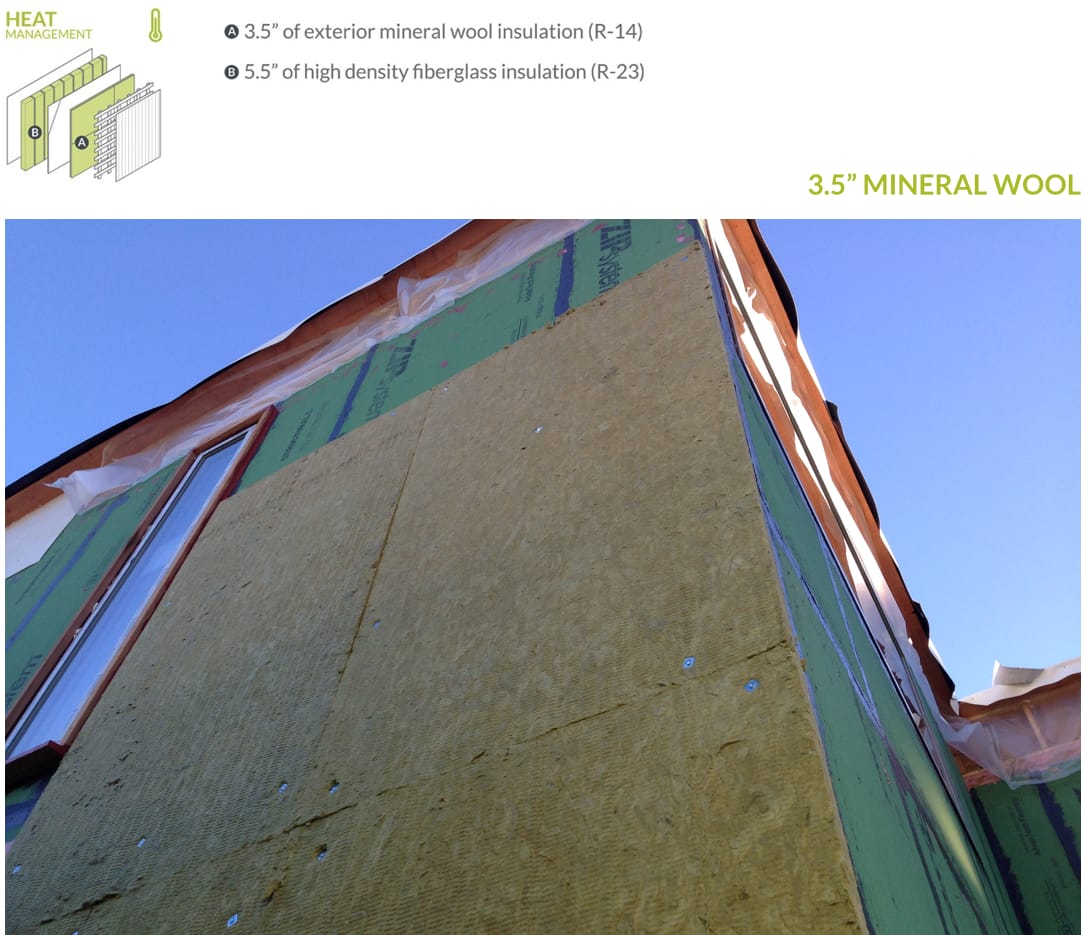
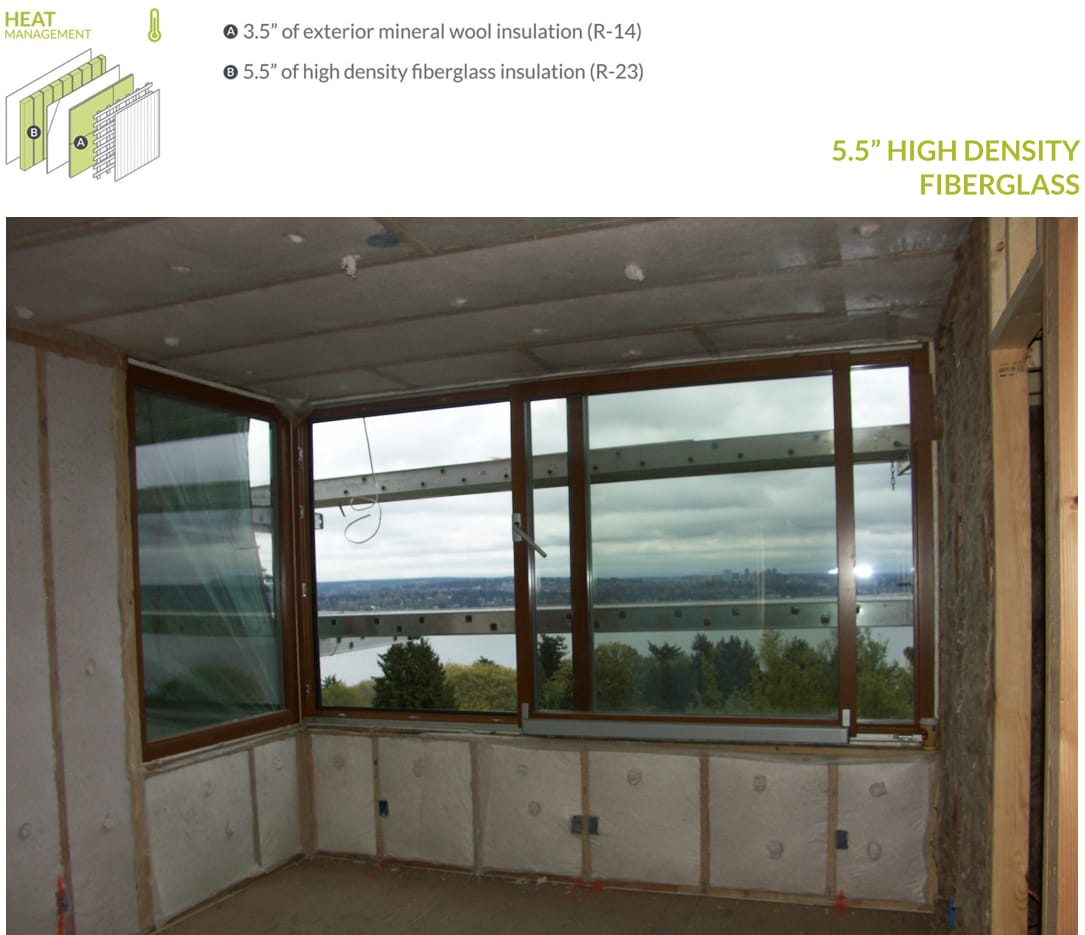
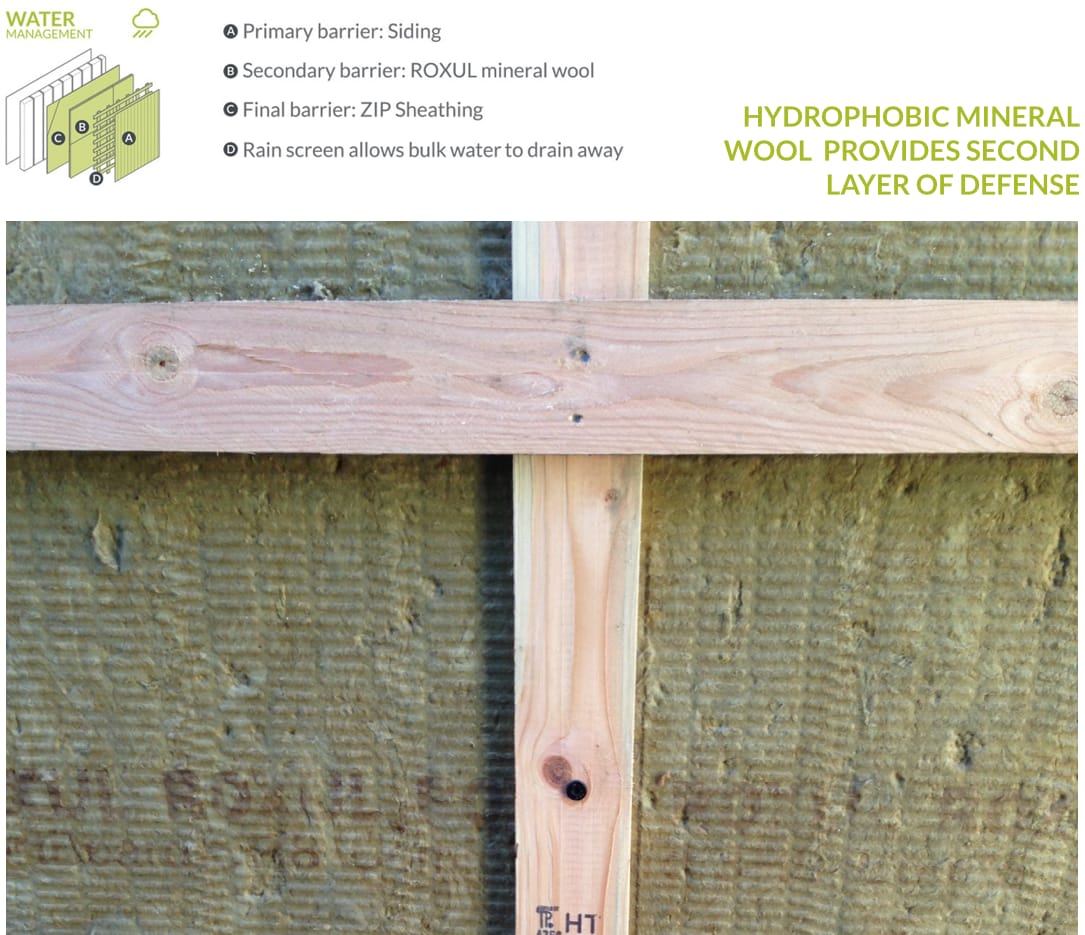
 A 3.5” exterior, monolithic layer of ROXUL mineral wool insulation adds R-14 of insulative value to the assembly, while 5.5” of high density fiberglass insulation brings another R-23. The wall’s total insulative value in assembly (adding insulation, sheet goods, air films, etc.) is R-39 at center of cavity and R-34 whole wall.
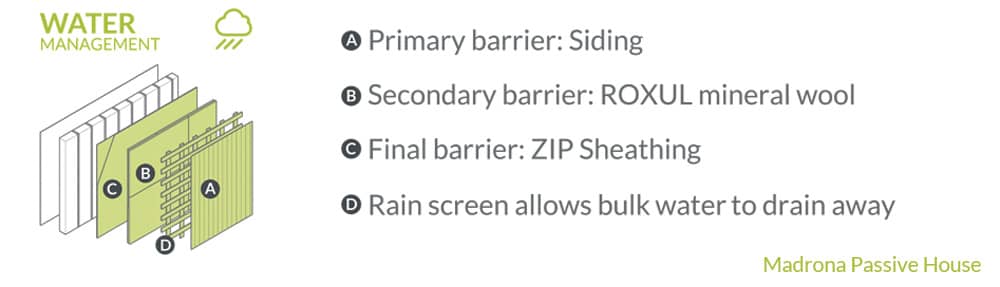
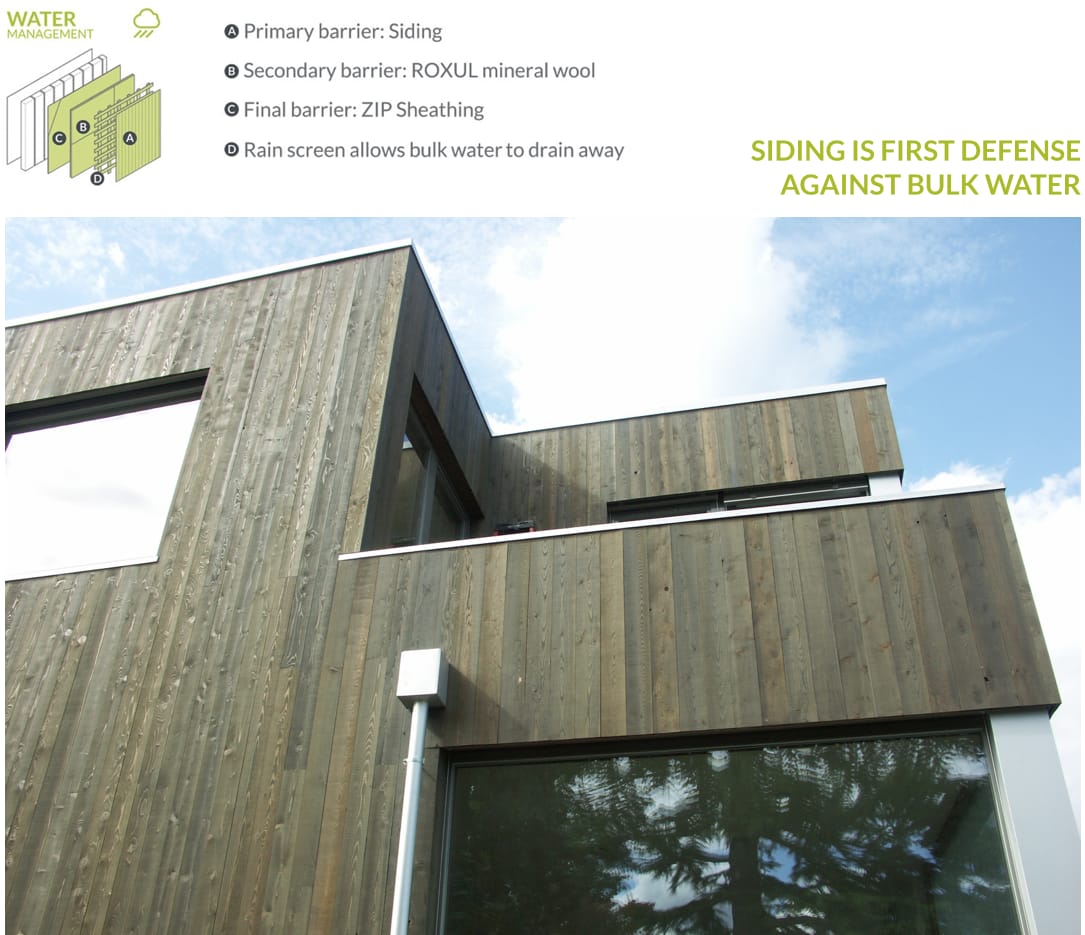
 Madrona Passive House’s 1×6 knotty cedar siding serves as the primary barrier to water intrusion. As in the other three wall assemblies described in this series, the rain screen cavity behind the siding allows water to drain away. The ROXUL mineral wool is hydrophobic, so provides another barrier to water, while the ZIP Sheathing WRB serves as the final barrier.
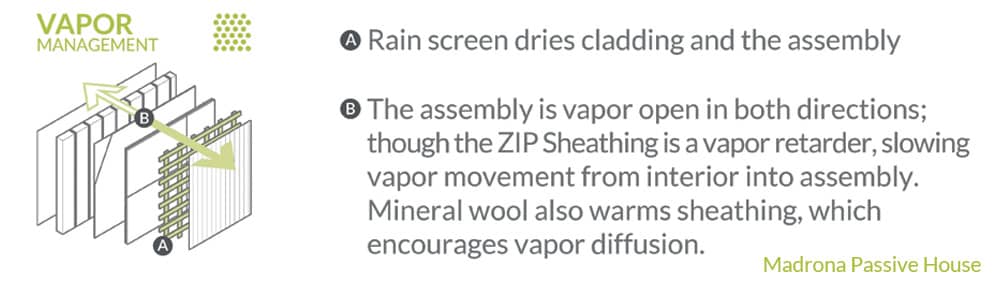
Because the OSB of the ZIP Sheathing is a vapor retarder, the assembly is semi-permeable to the inside, slowing vapor diffusion from the home’s interior into the assembly. The mineral wool warms the ZIP Sheathing, preventing moisture accumulation there. And because the mineral wool is very vapor open, vapor diffusion to the outside is fairly unimpeded. The assembly’s ventilated rain screen adds drying capacity, and therefore durability, to the wall.
With Madrona Passive House’s wall we have simplified the assembly down to six material layers; by comparison, Karuna House and Pumpkin Ridge Passive House both have seven layers, while the Glasswood Retrofit has ten. That’s progress!
See an annotated photo tour of the assembly’s layers:
Check out the other posts in this high performance wall assembly series:
- Karuna Passive House Wall Assembly
- Pumpkin Ridge Passive House Wall Assembly
- Glasswood Passive House Retrofit Wall Assembly
Check out our madrona passive house portfolio page